Saturday, June 11, 2011

Lloyd, Bush, Swingler & Sahnow - Workers Music Association


BERT LLOYD

Albert Lancaster “Bert” Lloyd was born 29th February1908 in Wandsworth, South London, His father held numerous jobs trawlerman, docker, draper’s, poultry farmer before serving in World War One, when he was severely wounded in the War. He worked for a time as an Automobile Association patrolman. Lloyd recalled that on a visit to Sussex when he was a child of five hearing Folk music. He remembered his parents singing “gypsies songs” around the house. Unfortunately by the age of fifteen his mother had died of tuberculosis and his father an semi-invalid ex solider was to unwell care for him.

Accordingly the young Bert Lloyd he was offered assisted passage to Australia in 1923 by the British Legion, on arrival in Australia he secured work as a sheep shearer on sheep stations and cattle hand in New South Wales .
There was little to do in the Australian bush except work, drink, and gamble and he decided to return to Britain . However, he had spent some time while in Austalia collecting Australian folk songs and studying at Sydney Public Library’s.

In early 1934 Lloyd took the opportunity to leave Australia for a job minding merio sheep in the Transvaal in South Africa but this did not work out and he returned to Britain only to find it engulfed by mass unemployment. With no more he spent his hours in productively in the British Museum in London . Teaching himself Spanish and devouring books on folklore and folk songs he stated later that their was “nothing like unemployment for educating oneself”.

It was around the winter of 1934-1935 that Lloyd came into contact with Leslie Morton, Jack Lindsay, Alan Hutt, George Rude, Maurice Cornforth, and Dylan Thomas he joined the Communist Party , attributing A.L. “Leslie” Morton’s “A Peoples History of England” as a book that particularly influenced his politics.
Morton said of Lloyd that he collected Folk songs “the way some people collect postage stamps”. It was Morton who took Lloyd to the famous Eel’s Foot Pubic House at Eastbridge, Suffolk (close to Leiston) where a song school had been kept for at least 100 years. Out of the came a famous live broadcast aired on 29th July 1939.

Tired of unemployment he ended up in 1937 singing on a whaling ship the “Southern Empress” working the South Atlantic . There were many welsh sailors on board who sang hymns and popular songs all the time and it was on the seven month trip that Lloyd began to sing regularly even organising a ship’s concert transmitted over the ships radio (the ship was later to be sunk of Newfoundland by German U boats on the 14th October 1942 killing 48 of the 125 mostly Norwegian crew). In 1938 Lloyd took another posting on a freighter out of Liverpool.
In 1937 Bert Lloyd article “The Peoples Own Poetry” was published in the Daily Worker and in 1938 the BBC accepted a script for a documentary on seafaring life “The voice of the seamen” , the good response to the documentary ensured the BBC commissioned further documentaries, including a series of programmes on the rise of Nazism “ The Shadow of the Swastika” co written with Soviet historian Igor Vinogradoff.

During the War Lloyd enlisted in the army in March 1942 and trained as a tank gunner in the Royal Armoured Corps, but was seconded to the Ministry of Information working in the Anglo-Soviet Liaison officer producing leaflets promoting British culture in the Soviet Union . Later in 1942 he became co-editor of “Turret” a left wing service newspaper
After the War (1945) he worked on “Picture Post” but left the job in an act of solidarity with one of his colleagues in 1950.

In 1944 The Workers Music Association, which had been established in 1936 with Alan Bush as its first President and active support of Benjamin Britten, Hans Eisler and John Ireland, asked Lloyd to write an introduction to folk songs called “The singing Englishmen”. In this Lloyd advanced the first assessment of the corpus of English songs since Cecil Sharpe.
Bert Lloyd’s continued interest and knowledge in Folk made him pivotal to the Second English Folk Revival which has sometimes been dated to 1950 when Alf Lomax arrived in Britain searching for songs for his “World Library of Folk and Primitive Music”. Lomax became involved in cultural and musical tribute in 1951 to Councillor Joe Vaughan the former Communist Mayor of Shoreditch, where he joined Ewan MacColl in singing “One big Union” According to legend the Communist Party then called upon Lomax to work with MacColl and Lloyd to start the Folk revival.

The Communist Party was by accident or design unquestionably central to the Folk revival and Lloyd key interpreter of the Folk traditional, The British first folk club opened in Manchester in 1954 by Communist Party members Lesley and Harry Boardman and Malcolm Nicholson opened Ballards & Blues Club in London . Meanwhile in Birmingham Communist, Ian Campbell had not only established the first Folk band “The Clarion Skiffle Group” in 1956 a prototype for groups such as the Dubliners and Corries. However Campbell was also key in establishing the largest and most influential Folk Club in the country the “Jug o’ Punch” Folk Club. The first folk festival was held in Sidmouth, Devon in 1955.

He became heavily involved in Centre 42 named after resolution 42 moved by the Association of Cinematograph, Television and Allied Technicians (ACTT) and seconded by the National Union of

Mineworkers on cultural activists passed at the 1960 TUC Congress

Congress recognises the importance of the arts in the life of the community, especially now when many unions are securing a shorter working week and greater leisure time for their members. It notes that the trade union movement has participated to only a small extent in the direct promotion and encouragement of plays, films, music, literature and other forms of expression, including those of value to its beliefs and principles. Congress considers that much more could be done..

Centre 42 was a highly successful touring festival headed by Arnold Wesker, Ewan MacColl and Lloyd. In 1962 Centre 42 toured with the invitation of Wellingborough, Nottingham, Birmingham , Leicester, Bristol , and Hayes & Southall) later Centre 42 would secure a home at the Roundhouse in Chalk Farm. Centre 42 also had numerous offshoots in larger towns and cities. Centre continued its work as late as 1970, interestingly the newly refurbished Roundhouse has a new auditorium named in honour of Centre 42 called Studio 42)

Centre 42 was important in bringing Anne Briggs, the Ian Campbell folk group, the Spinners and the Watersons.

He edited the Penguin Book of English Folk Songs, which he edited with Vaughan Williams

In 1971 Lloyd help produced a six episodes of a television documentary with Barry Gavin a television producer

According to Alun Howkins Bert Lloyd “sang, like the singers of the tradition I have come to know over the years, almost diffidently, laughing with the songs, telling us about them and transfixing an audience as his quiet but powerful voice, nearly always unaccompanied, took us through “James Harris or “The Four Loom Weaver” or “The Stone Cutter Boy”………“We in the provinces learnt our songs and our singing style from records. Bert, along with Ewan Mac Coll, dominated those records. “Shuttle and Cage”, “ Second Shift”, and later “The Iron Muse”, taught a generation that music could be something other than school songbooks or the pre-digested pap that American culture fed us in the guise of “pop music”. We learnt the songs, sang them at home and then, finding others wanting to listen, formed folk clubs”.
Bert Lloyd was still singing in 1981 shortly before his death in Greenwich London on 29th September 1982, his communist views never faltering
Michael Walker
Source
Alun Howkins Obituary History Workshop spring 1983
Gerald Porter The Worlds ill-divided; The Communist Party and Progressive Song 1998
Chris Wrigley British Trade Unions since 1933 printed 2002
David Gregory A.L. Lloyd and the English Folk Song Revival 1934-1944


Alan Bush

Alan Dudley Bush was born in Dulwich on 22 December 1900. As a student at the Royal Academy of Music from 1918 to 1922 he won several prizes both as pianist and composer, after which he continued his studies as a composer with John Ireland and as a pianist with Benno Moiseivitch, Mabel Lander and Artur Schnabel in Berlin.

He later returned to the Academy as a professor of composition, where he taught several generations of British composers as professor of composition at the Royal Academy from 1925-78

Another close mentor, from around 1915, was Rutland Boughton (see separate entry), a famous composer. In 1924, Bush joined the Independent Labour Party and a year later he became actively involved in the London Labour Choral Union, which Boughton had founded. In 1929, Bush entered Berlin University to study Philosophy and Musicology but his work towards a degree was cut short by the depression and the threatening rise of Hitler fascism. He returned to London in 1931 and within two or three years was profoundly committed to Marxism, joining the Communist Party in 1935.


In 1936 he helped found the Workers Music Association, of which he was chair from the beginning until he became President in 1941 continuing in this role until his death in 1995. He was also WMA Director of Studies at each successive WEA Annual Summer School until 1975.

Alan Bush had early success as a professional composer with his String Quartet, op. 4, which was given a Carnegie award in 1925. Bush is credited with over a hundred works of composition, including his best known work, Dialectic (1929), op. 15, for string quartet, which followed his debut piece, Relinquishment (1928). This helped establish his reputation abroad when it was performed at the Prague International Society for Contemporary Music Festival in 1935. He also founded the London String Orchestra in 1938 and continued to be associated with it up to 1952.

Much of his pre-war music was written the most advanced of European idioms of the time. Later, he developed the idea of a `national' style that was simpler, intending to make the music more accessible to a wider audience.

The Workers' Music Association acted as an organisational body for events, and as a publisher of working-class songs (both historical songs and newer songs written by contemporary composers). In 1934 Bush wrote the music for a theatrical pageant The Pageant of Labour at Crystal Palace. For 1938, a much bigger series of events was planned which included a production of Handel's Belshazzar, a large pageant at Wembley Stadium, and a Festival of Music for the People staged at the Albert Hall.

For the event at Wembley Stadium Bush wrote his Pageant of Co-operation to a scenario by Montagu Slater and Andre van Gyseghem (Bush, together with Slater, Gyseghem and Randall Swingler - see separate entry) were prime movers in mounting these mass pageants). The work was performed on 2 July 1938 by members of the London/South Suburban/Watford Co-operative Societies with the speaking parts and ensemble directed by Bush.

His Truth on the March (1940) reflected the historical moment but, in the early stages of the second world war, he was banned - amongst others - from performing for the BBC for signing up to the Peoples Convention, although this was later lifted. Later, Bush was in the army, for the RA Medical Corps, from 1941-5.

He produced four symphonies, one of which was inspired by the 1930s economic crisis and another by the Lascaux cave paintings. In the immediate post-war period, he produced The Winter Journey and Lidice (1947), which brought the story of how the Nazis had liquidated the very existence of a Czech village which had been the centre of resistance that was now in the process of reversal by the post-war socialist state there.

His operas all have themes of social significance and the words of six of seven operatic works were written by his wife, Nancy Bush (see separate entry). In 1947 the collaboration in the field of full-length opera between Nancy and Alan began with Wat Tyler, a dramatic story of the Peasant Rising of 1381. Our Song, to a text by Nancy, was commissioned for the opening of the Nottingham Co-operative Arts Centre and was first performed by the Workers' Music Association Singers, conducted by the composer in 1948.

In 1949 the newly-formed Arts Council announced that it would commission a number of full-length operas in connection with the Festival of Britain. Composers were to compete under pseudonyms. At the time of the announcement it was carefully stated that no production could be guaranteed. Four works were commissioned under the scheme and one of these was Alan and Nancy Bush's Wat Tyler. In the event, none was performed in Britain at the time of the Festival.

Wat Tyler did, however, achieve great success in Germany: it received two studio broadcasts from Berlin in 1952 and these led to a stage production in Leipzig during the 1953-4 season. This first run comprised 14 performances and the opera was revived again in the following season. In addition Bush received three further operatic commissions from German theatres. Other well-known operas of Bush are the Sugar Reapers, Men of Blackmoor, Joe Hill, the Man Who Never Died and Guyana Johnny; whilst Voices of the Prophets was more of a choral piece (1953). Africa is My Name also appeared in the 1950s.

Whilst always well thought of in Eastern Europe, under socialist governments, his ability as a composer was never given much scope for performance. A series of BBC programmes in the 1980s at last gave Bush the recognition he deserved as a British composer of distinction. Reflecting this, perhaps, Bush produced his last major composition, Six Short Piano Pieces (1983). Alan Bush died in 1995.

By Graham Stevenson


WILL SAHNOW


During the night of Tuesday, 15 January 1957, Will Sahnow, General Secretary of the Workers' Music Association, died in his sleep. This untimely event (he was only 59) has bereft the cultural movement of the British working-class of a musician' of great versatility, supremely well fitted for the post he occupied since 1939, when his appointment as a paid official transformed the Association from a struggling group of enthusiasts into a continuously functioning centre of activity, from which any working class organisation could obtain advice or practical help in any musical field.

Will's first love was the orchestra, his instruments the 'cello: and french horn His first musical position was as an amateur conductor of an Orchestra in North London, organised by the London Co-operative Society. He took from the first a great interest in the brass band movement, and later entered the field of choral music, singing and conducting in the Co-operative choral movement.

His appointment as General Secretary of the Workers' Music Association came at the beginning of its first period of expansion. For several war years he organised the Topic Record Club, which produced and despatched a record to eac|h of its 900-odd members every month; he carried out the organisation of the recordings and the labour of dispatching the records with the regular help of one part time assistant only. In addition he had to cope with the extensive publication of music, including the large sales of Soviet songs, and of books such as lain Lang's
Background of the Blues.

Since the war the activity nearest to Will's heart has been the annual Summer School, of which last year's was the eighth. The production of Topic Record was resumed several years ago, and only last September reached a point when full-time organiser. Bill Leader, could be appointed.

In the midst of all this Will found time to compose songs, to make arrangements for brass band, and to cut man beautifully written stencils of choral music.

For many years he found in the theory and practice of the Communist Party that guide to action which can alone transform life in Britain into a society in which musical art will become the possession of the whole people and a worthy expression of their advance in peace and happiness

A.B.

World News 2 February 1957


Randall Swingler

Randall Swingler (May 28, 1909 – 1967) was an English poet, who wrote extensively in the 1930s and joined the Communist Party in 1934.

He came from a well-to-do family near Nottingham and was educated at Winchester College, and New College, Oxford. He was an accomplished flautist, and later was much involved in musical collaboration, as a librettist.

He established Fore Publications (1938); the magazines Left Review (to 1938), Arena, Seven and Our Time. Swingler also published the Key Books series, and the Key Poets series. He was one of the organisers of the covert Writer's Group of the late 1930s, attempting to co-ordinate a 'literary policy' of the Left. He was involved also in work for the Unity Theatre.

He served with the British Army in Italy in World War II, joining as a private soldier, and being awarded the Military Medal. After the war he experienced hard times. Randall Swingler left the Party in 1956, was one of the founders of The New Reasoner and died on 19th June 1967.

Charles Ringrose (see separate entry) stated of Randall Swingler at the time of his death in June 1967 that:"For the very moving memorial work to those who fought in Spain, composed by Benjamin Britten in 1936, Randall contributed the text for the tenor solo and final chorale; he was associated with Alan Rawsthorne in two works the last "A Rose for Lidice" having been performed at Thaxted a few years ago, conducted by Imogen Holst.

His main work in the field, however, was done in co-operation with Alan Bush, starting with "Hunger Marchers" in the early 30s and culminating with the dream of Llewellyn up Griffith

His text for the last movement of Bush's Piano Concerto was unique as the first piece of writing in this genre, also it was Randall who was co-editor with Alan Bush of the Left Song Book published by the left Book Club in 1938".

Randall Swingler also wrote under the nom de plume of A L Carline and John Arkwright.

His publications include:

`Crucifixus (1932) - play
`Difficult Morning (1933) - poems
`The Left Song Book, (1938) - compiled with Alan Bush
`The Years of Anger - poems
`The God in the Cave (1950) - poems

See: Comrade Heart: A Life of Randall Swingler (2003) by Andy Croft; Selected Poems of Randall Swingler (2000) edited by Andy Croft;

Morning Star 26 June 1967

-----------------------------------------------------------------


The Communist Party was involved in both English Folk revival's and key to this was the Eel's Foot Public House, Eastbridge, where A.L. "Bert" Lloyd Communist and Workers Music Association founder, recorded the now famous BBC Radio Folk sessi
on on 13th March 1939.

Sunday, June 05, 2011

First Labour Governmnet 1924


Picture of MP's First British Labour Government 1924

P
lease click on photo to enlarge


Friday, June 03, 2011

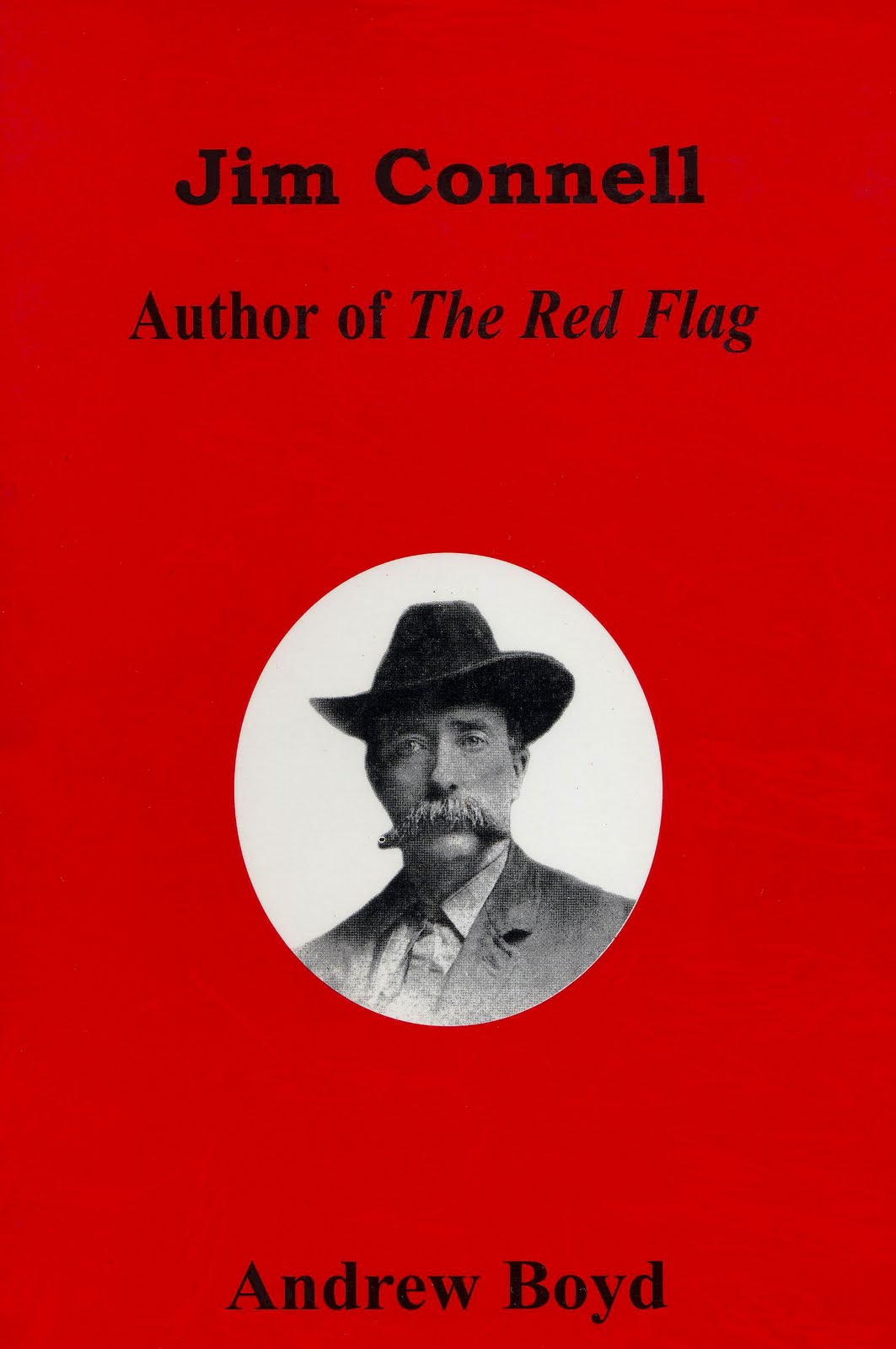
Jim Connell - The Man Who Wrote "The Red Flag"


The Rebel Poet Who Gave The Workers Their Battle Hymn
Daily Worker Friday 2 February 1962


Thirty Three years ago yesterday, Jim Connell, thet man who wrote " The Red Flag," died at the age of 76.
For over 70 years that song has been the battle hymn of the British Socialist movement.
Multitudes in each generation have sung it, but comparatively few have known anything about the author.
Jim Connell was an Irishman, born in 1852 in the village of Killskyre in Co. Meath.
During his boyhood days the terrible living conditions in Ireland under British rule awakened the class-consciousness of young Jim, and he joined the Irish Fenian/Brotherhood before he reached adult age.
Irish freedom
When Michael Davitt, one of the great fighters for Irish freedom, was released from a seven year. jail sentence and began organising the Irish Land League in 1879, Connell was then an exile in Britain, but he became a member of the British executive committee for the League.
In England Jim Connell soon realised that the fight for national freedom had its place in the inter national struggle for Socialism. and he joined the Social Democratic Federation long before the Labour Party was formed.
In 1890 he stood as a Parliamentary candidate for the S.D.F. in a three-cornered fight with Tory and Liberal in a North London constituency. He later became a member of the Independent Labour Party.
Charming wit
He was a man of many parts and once described himself as having been a " sheep farmer, dock labourer, navvy, railway man, draper, journalist, and ' a lawyer of sorts.' “ But he also had the attributes of an artist—he was an ardent student of Shakespeare and a lover of nature.
I first met him in 1924 with Tom Mann, who invited me to join them at a pub named The Golden Cross, which then stood in the Strand opposite Charing Cross Station.
I was then under 30 years of age and always remember the deep impression of that first meeting with Jim Connell. He was a hefty man over 6ft tall and very picturesque in his style of dress—a black sombrero hat, a large bright red tie and a long black cloak. He looked like an old Shakespearean actor. He had an enormous moustache and a rather high-pitched voice.
When he spoke with his rich Gaelic brogue there could be no doubt that he was an Irishman. He was a great talker with a charming wit, but he had a fighting spirit which blazed forth, whenever we talked of the class struggle.
I met him several times in the company of Tom Mann, Tom Quelch and Nat Watkins and always enjoyed his company. When Tom Mann was there it was great fun, because he had the same exultant nature as Jim.
they chaffed and bantered each other to the delight of our own group and often to the amusement of others within earshot.
At one period in his life he got his living as a poacher and later wrote a book entitled " The Confessions of a Poacher." Once when I was in his company he slapped me on the back with gusto and complimented me on my organising work among the unemployed and then added: " But why don't you advise the unemployed to become poachers? There's plenty of good food to be grabbed on the big estates of the Lords and Dukes of Britain."
Many poems
He wrote many poems and lyrics which are now unobtainable, but the one that still survives is " The Red Flag." It was first published by the S.D.F. paper Justice in 1889 the year of the famous strike of the London dockers for the " tanner-an-hour " wage.
No doubt this event prompted its publication. But I think the original inspiration of Connell for writing the song was the international protest against the execution in America, on November 11. 1887, of four militant trade unionists who were leading a strike movement for the eight hour day.
Chicago Martyrs
They became known as " The Chicago Martyrs." As they stood on the gallows they each pro claimed their faith in the ultimate victory for the working class. One said: " The time will come when our silence in the grave will be more eloquent than our speeches."
I believe that it was this tragic event in international working class history, and the challenging spirit of the Chicago Martyrs. which inspired Jim Connell to write the defiant verses of " The Red Flag."
Wal Hannington
Daily Worker Friday 2 February 1962


Why he wrote it
In The Call (B.S.P. weekly) of 'May 6, 1920, there was an article by Tim Connell entitled " How I Wrote ' The Red Flag.' " He mentioned a series of great struggles which " got me into the mood which enabled me to write ' The Red Flag.' " The first was the fight of the Irish Land League, which roused the democrats of all countries and in which he was secretary of the Poplar branch.
The second was the struggle of the Russian revolutionaries. He was in the company of one of their great figures, Stepnyak, on the night the latter was accidentally killed at a level crossing.
Stepnyak's book " Underground Russia " had had a deeper effect on him than any religious revival, Connell wrote. The third was- the hanging of the Chicago anarchists, and particularly the speech of Mrs.Parsons, the widow of one of them, which Connell heard. And the fourth was the great dockers' strike of 1889, which " aroused the whole of England."
So Wal Hannington, in his splendid article (February 9) has hit the nail squarely on the head. Connell said that he wrote the first two verses and the chorus during a 15-minute train journey between Charing Cross and New Cross, and finished the rest that night.
Then he sent it to Harry Quelch, Editor of Justice. It was printed in the Christmas number, published on a Thursday, and the following Sunday the song was sung in both Liverpool and Glasgow.
Connell was very emphatic that it should be sung to the air of " The White Cockade," not of the old German church hymn, " calculated to remind people of their sins and frighten them into repentance." known also as " Maryland."
ANDREW ROTHSTEIN. London, N.6.
Daily Worker 13 February 1962


MEN WHO SANG "RED FLAG" IN BARRACKS 1929

Highlander located in Maidstone Prison

STORY OF REVOLT

At least one of the three Sutherland Highlanders sentenced to five years' imprisonment, following a mutiny among the troops in Jamaica, according to news which has just reached the Daily Worker is in Maidstone Gaol, Kent.

The exact place where the others are imprisoned is not yet known, but here is an opportunity for London workers to strengthen the campaign for the immediate release of these men.

It will be remembered that these four men received this vicious sentence about eighteen months ago at a court martial following a mutiny and the singing of the "Red Flag " in the barracks by the soldiers.

The Capitalist Press made a great show of the affair about six weeks ago, pointing to it as an example of how stern measures had to he enforced in order to maintain discipline.

The whole scandalous affair of the brutal sentence and the way news concerning the case was being suppressed bv the Capitalist Press was exclusively exposed in the " Workers' Life last August. The whole affair first came to light following the publication, in a Communist pit paper in Fife, of a letter from a soldier in the Sutherland Highlanders.

His regiment was stationed in Jamaica, in the West Indies, and his
letter stated that scandalous conditions for the men prevailed. Deep resentment was growing among the soldiers against the bad conditions, and this came to a head in the revolt .

In his letter Private Clark described the events which led up to the revolt. An N.C.O. and two officers entered the barrack room to arrest two soldiers for making a noise after 10 o'clock. The men, it is said, demanded the remedying of certain grievances, and had the complete support of the two hundred men -in the barrack room, who commenced to singing the " Red Flag." Eventually the revolt was crushed, the four men taken to the guard room and. Later, court martialed.

Daily Worker first Edition
January 1st 1930

JIM CONNELL FACTS
Born 27th March 1852 - Kilskyre, Meath, Ireland (five miles from Kells)
Died 8 February 1929 - Lewisham Hospital, London, england

Emigrated to London in 1875
His occupations included, Dock labourer, navvy, railwayman, draper, journalist and sheep farmer
finally, Secretary of the workers Legal friendly Society based in Chancery Lane, Central London

Keen Countryman, poacher, he was taught by the local Police constable his poaching skills, Connell wrote a book "Confessions of a Poacher" which sold 80,000 copies also another book "The truth about the Game Laws"

Connell disregarded the game laws. in his opinion wild animals could not be anybody's private prporty"

"I broke ev'ry law the land robbers made
And mocked at the strength they put forth"

Connell had a favourite Lurcher called "Nellie" and he stated in Labour's Whos who Recreation as "poaching". He was caught poaching twice fined £1 Croydon (Mr Gladstones at Addington) and woolwich 13s 6d
According to a Times article in 1922 "in the authors own words the spirit of revolt against injustice in every country had become a religion"
Jim Connell wrote the Red Flag on a fifteen minute night journey from Charring Cross Station to New Cross Station, In South East London. in the Times article 22 January 1922 he states "The fortnight before Christmasof 1889"

Just prior to the train journey Connell had attended a lecture by Herbert Borrows
"As I sat down in the train for New Cross something urged me to write a song embodying the spirit of that lecture" (Times)

One of Jim Connell's favourite Public houses was the Golden Cross in the Strand

Branch secretary of Poplar Land League

Red Flag first produced in SDF journal "Justice" 1 December 1889

The "Maryland" or "Die Tannenbeaun" version was published by Adolph Smith of Headingley in 1895

The "White Cockade" "which could be heard in the mud cabins all over Ireland in the "sixties" and before" " a tune to which Robert Burns had written "John Hielan Man" Times article

He lived at 408 New Cross Road, Lewisham, later Battersea Rise and later still at 22a Standon Park,Lewisham
Jim Connell joined the Social Democratic Federation (SDF) in June 1881 and was later a member of the Independent Labour Party
1890 Jim Connell was Socialist candidate for Finchley East

Connell received the red Star Medal for composing the Red Flag by decree from V.I.Lenin in 1922

Cremated Golders Green Crematorium an ashes scattered in garden of Remembrance


The White Cockade V (Maryland) Die Tannenbaum
"The Red Flag" has fine words, yet few people sing it now because the tune is so dreary. In fact. Tim Connell, about whom Hannington wrote the interesting article on February 9, intended " The Red Flag " to be sung to the lively tune called "The White Cockade."
But in the 1880s the use of British folk tunes for workers' songs was wellnigh unheard of, so the defiant verses got hitched to the draggy German tune of " Tannenbaum."
Music fashions have changed now, thank God, and it's time "The Red Flag" text was divorced from its unsuitable German mate and reunited with the grand springing tune that Connell had chosen for it.
Then you'd hear- it really sung, by young as well as old. And .it would be a pleasure, and not merely a duty, to sing it.
A. L. LLOYD. London, S.E.10.
Maryland' version
For nearly 40 years I have been conducting " The Red Flag " to the " Maryland " tune.
When energetically and not too slowly sung it is an inspiring song.
Unfortunately the tune " Maryland " has reactionary associations in Central Europe, so to sing it there is an affront.
By all means let us try singing the words to the original tune for which they were written.
But do not let us deride the" Maryland " version as a piece of useless junk; it is still sung by hundreds of thousands of people in the working-class movement.
How can we get a new song? The only new progressive songs that have caught on in Britain since the First World War are the C.N.D. songs "The H-Bomb's Thunder," words by John Brunner to a Moody and Sankey hymn tune, and " The Family of Man ' by Fred Dallas.
A competition for a new" song could not succeed unless we controlled B.B.C. and I.T.V. and could plug it. New songs should certainly be tried out at mass meetings. Perhaps one of then will catch on.
ALAN BUSH. Radlett. Herts.


Jim Connell Author of the Red Flag
Poscript
By Andrew Boyd

In 1963 the Workers' Musical Association thought it time to settle the argument about either Maryland (Tannenbaum) or The White Cockade being the proper air to which The Red Flag should be sung.

The association produced a record of The Red Flag, sung by the Glasgow Socialist Choir and the Young Communist League Singers to the tune of Maryland on the one side and to the tune of The White Cockade on the other.

Reviewing the record, on 19 January 1963, Fred Dallas, music critic of the Daily Worker, decided there was 'no question' which tune the Labour Movement should choose. The answer was Maryland simply because it is so much better sung. The Maryland version is sung so as to give each word its proper weight and the diction of the massed Glasgow Socialist and Young Communist League Singers is so impeccable that the whole point of the song comes over.

But The White Cockade version is taken at a tremendous lick, with the words emerging like mouth music, a meaningless gabble which passes in one ear and out the other.

Fred Dallas also observed that as soon The Red Flag was sung in Glasgow and in Liverpool in December 1889 it was no longer Jim Connell's property. It belonged to the Labour movement which had created both Connell and the song. The movement had therefore the right to sing The Red Flag to whatever was judged to be the better tune.

NOTE

The Red Flag was played for the first time on the BBC in 1936 as part of the BBC radio "Songs that made history" series despite the opposition of the British Empire Union (Times 26 September 1936)


Wednesday, April 13, 2011

Tuesday, April 12, 2011

Friday, April 01, 2011

Lansley OUR NHS is NOT For Sale


Estate Agents Cameron, Clegg & Lansley, held a viewing of prime residential property - St Thomas’ Hospital in London today (1 April 2011). UNISON, the UK’s largest union, organised the spoof sell off to expose the huge dangers lurking in the Tory’s Health and Social Care Bill.

The union is warning that Lansley’s vanity project poses a health risk to patients, to the NHS and to the nurses, midwives, hospital porters and medical secretaries who keep our health service running.

Paste in front of the first paragraph:


Dave Prentis, UNISON General Secretary, said:

“Selling off the NHS is no joke – but that’s exactly what’s the Health and Social Care Bill paves the way for. Even the Tories are waking up to the toxic prescription that the Health and Social Care Bill really is for our NHS.

“Handing over £80 billion to GPs is a reckless gamble. Doctors don’t want it, and it will poison the relationship between patients and their GP. Who wants to be sitting across from their doctor wondering if the treatment they are prescribed is what they need, or what the GP can afford to pay for?

“And taking the private income cap off hospitals when they are being hit with cuts is a recipe for disaster. Patients who can pay will be the top priority. NHS patients will be pushed to the back of the queue – eroding the core principles our NHS was founded on.

“It’s time to take the Health and Social Care Bill to the mortuary - where it belongs.”

The hospital sell off stunt is part of a nationwide day of action against the Health Bill, and ahead of the union’s annual health conference. Taking part in Liverpool, the health conference brings together 1200 delegates, representing UNISON’s 460,000 health workers.

UNISON’s big opposition to the titanic Health and Social Care Bill

* Big cuts in health spending. These are being taken from patient care and leading to job losses – including clinical staff – across the NHS.

* Opening up the NHS to private profit. Taxpayers’ money destined for NHS patients will be diverted into shareholder profits.

* NHS patients will be pushed to the back of the queue because the proposed Bill will take the cap off the amount hospitals can earn from private patients.

* It means competition, not co-operation. The government wants to run the NHS through competition between different health providers and market forces.

* It will create a huge postcode lottery. The care patients can expect will vary from place to place, increasing costs and health inequalities and hurting vulnerable people the most. No-one voted for this.

* The NHS is working and public satisfaction with the NHS is at an all time high. If it ain’t broke, why fix it?