Showing posts with label TGWU. Show all posts

Monday, October 17, 2016

United Order of General Labourers of London - Union Banner 1912


United Order of General Labourers of London (U.O.G.L.), 
Union Banner 1912

Union established 1878

One of the original London Dock workers Unions

Central painting a depiction of of London Bridge

Later amalgamated into the Transport and General Workers Union in 1924


Saturday, October 15, 2016

London Carmens Trade Union Banner 1912


London Carmens Trade Union banner
Bethnal Green Carmens Trade Union banner No 22

"All Workers Have A Right To Live Well"

Saturday, October 17, 2015

Sunday, June 14, 2015

Sunday, September 15, 2013

Hillingdon Dinner Ladies Dispute 1985


1985 Campaign by Hillingdon school meals staff to defend term and conditions (The Conservative controlled Council wanted to stop retainer payments during holidays which would have forced many into poverty).

In 1986 The Conservatives lost power and Labour with Liberal support reversed the decision and to its credit retrospectively, such was the feeling of injustice felt that even the Conservative Councillors on the relevant committee did not oppose the move.

Unions involved NUPE, GMB and TGWU, with NUPE full time officer Eddie Coulson and well respected local branch secretary TGWU's Pete Denman taking the lead.

Tuesday, January 01, 2013

May Day - London 1973 - "Stop the Pay Freeze"


Dateline:...... May Day, London 1973

London saw its biggest and most united demonstration since the war as over 20,000 people marched, banners waving to the tune of a jazz float organised by the Musicians Union, from Temple to Hyde Park corner; in Glasgow 12,000 marched, in Liverpool 15,000 and in Birmingham 10,000.

Everywhere was the same slogan's - "Give use a decent standard of living", "Stop rising prices" and "Unfreeze our wages " Stop the Freeze" and "Heath Out"

COHSE Health Services Jounal - June 1973

How much longer must we tolerate rising prices, stagnant wages and Tory self-advancement at the expense of the workers.

in Britain the message of this year's labour day is as it has always been - the demand for a just, egalitarian society and a decent standard of living - a demonstration of the mighty power of the working class


 TGWU, APEX, EEPTU, SOGAT,  NATSOPA banners

Saturday, June 18, 2011

Eric "Ginger" Evans - TGWU Union - EMI Hayes

Eric "Ginger" Evans was a leading member of the Transport & General Workers Union at EMI in the 1960's, 70's and 80's (TGWU 1/690) working in the Packing Department at Blyth Road, Hayes, West Middlesex for over thirty years.

At one point Eric Evans was a member of the TGWU National Executive Committee, and was a regular delegate to TGWU conference.


He was presented with a TGWU "Gold badge" the highest union award (circa 1986 or 87) by TGWU General Secretary Rod Todd.

He was a patient at Hayes Cottage Hospital during the period of it's occupation by staff in late 1983.

Eric Evans lived at 43 Judge Heath Lane (Belmore Ward)

A Labour party member, Eric was generally on the left and opponent of Hayes right wing MP's Skeffington and Sandleson, he also opposed the local right wing Labour run Hayes & Harlington Urban District Council on issues such as council house rents.

Unfortunately, later in life Eric and his close friend fellow Welshman, Cllr Ivor Anthony fell out with the direction of the Hayes Labour Party in the Press on issues such as Gay rights and Ireland. As a result a witch hunt was launched against the local party by Labour party head office and the right wing media - no evidence of "ultra leftism" or "infiltration" by groups was ever forthcoming.

It's has to be pointed out that Eric was suffering from bad health during this period.

* we would welcome more information and better quality picture

Saturday, February 20, 2010

1951 - When Dockers' Went To Jail For the Right To Strike

When they’re in the Dock,
We’re out of the Dock”

-->
In 1951 the Labour Government was faced with huge insurmountable problems, the US Government had effectively forced Britain to join them in an Arms race against the Soviet Union, forcing Britain into huge debts.
The Government tried to hold down the increasing demand for higher wages, faced an unofficial wages strike by Dockers in a number of Ports (primarily London and Liverpool), it sought to use War time regulations to smash the strike and work to rule. The Attorney general Sir Hartley Shawcross decided to charge the unofficial Dockers leaders with conspiracy to incite dockers to take part in strike in contravention of the employment and national arbitration order 1305.
Seven ring leaders were identified, These were Harry Constable, Albert Timothy, Joe Cowley and Ted Dickens from London. Bob Crosby from Liverpool and J “Nudger” Harrison and Bill Johnson from Birkenhead.
On 9th February 195, Police raided the White Hart public house, Ratcliffe Highway, Stepney, East London, where a meeting of the Unofficial Port Workers Committee was meeting Jack Dash takes up the story “suddenly the doors of the committee room burst open and in stepped five hefty six-footers, up spoke the chairman Wally Jones “I don’t know what sector you’re from, but I’ve never seen you on the committee, who are you ?. “We are the Law” said one of them “and it’s a pinch” “A pinch” said Wally Jones the Chairman “What on earth are you talking about? We are a strike committee!” “That’s it, said the spokesman “We are arresting seven of your members under Order 1305, strikes and lockouts are illegal and you have contravened the Law”.
In response 7,000 Dockers stopped work in London and 11,000 on Merseyside. On the Docker’s first day in court 17,000 dock workers struck, after that London Dockers came out seven times on 24 hour protest strikes, under the slogan “When they’re in the Dock, we’re out of the Dock”. Solidarity action took place in Ports across the country, London, Liverpool, Hull and Manchester and elsewhere.
Dockers turned up to support the men throughout the trial, Vic Marney Secretary of the Unofficial Liaison Committee was arrested for obstruction.
Finally, 8,000 men turned up to support the men on the day the verdict was to be announced, singing Land of Home and Glory, Rule Britannia, Sons of the Sea and a moving rendition of Kevin Barry by some Irishmen present. The seven they were duly acquitted on all counts and were carried shoulder high through police lines, leading to the “hostile” Police organising a mounted charge “Cossacks” on the Dockers.
As they returned to their respective ports they were meet as hero’s once again and Order 1305 was duly consigned to the bin of history


-->


Jack Dash
Born in Southwark, South London in 1906, Jack Dash was an orphan, who left school at 14, becoming a builder, a fire-fighter and then a docker. Inspired by the novels of American author Jack London and after hearing Pat Devine and Nat Cohen speak on the Republican cause in Spain, Dash joined the Communist Party in 1936 (Stepney Communist Party meet on Wednesdays in Eric Street, Stepney).

Jack became effectively the unofficial leader of London dockers and, through that, a significant figure in the national Port Workers Liaison Committee.
He became relatively well-known as a household name by the 1960s as one of the most powerful of the Communist rank-and-file trade union leaders arising from his role as chair of the port shop stewards in the London docks. Due to the 18-year ban on Communists holding office in the Transport and General Workers Union, which lasted virtually until his retirement.
Having been involved in every London dock strike from 1945 to 1969, he was vilified by the reactionary press in much the same way as others who followed him were. The media could not accept the simple fact that it was the fear of casualisation returning, which fuelled the readiness of dockers to act in their self-defence. In response, Jack far-sightedly repeatedly warned that it was the short-sightedness of the employers that would lead to the demise of London as a major port.
In retirement, Dash became an official London tourist guide in the 1970s and an advocate for pensioners’ rights. He also spent some of his time quite successfully painting and sculpting, being commemorated in 1990 by the naming of “Jack Dash House”, a municipal office building on the Isle of Dogs, which holds regular exhibitions of contemporary art from Britain and all over the world. Jack published his autobiography, Good Morning, Brothers!, in 1969; the title referring to his invariable opening of mass meetings, often captured by television news. He died in London at the age of 82 on 8 June 1989.
In his autobiography, he said that the only epitaph he wanted on his tombstone was:
Here lies Jack Dash
All he wanted was
To separate them from their cash


Jack Dash
Leader of the London Dockers
(1907—1989)
Good Morning Brothers

I was just coming to the end of my autobiography when I was asked by a producer of the B.B.C. Television Studio at Shepherds Bush, London, if I would be prepared to take part in a new satirical programme called The Eleventh Hour. The idea was for me to read my own Obituary—written by myself. It was a new experience for me, and I rather fancied the oddity of sitting on a “live” programme and reading about my “dead” self. Here is what Isaid:


“Mr Jack Dash, who died last week when trying to pacify a mob of re-deployed port employers, was the first Communist Minister of Labour in the Bertrand Russell Coalition Government of 1971. His term of office was marked by the implementation of the Harold Wilson-Ray Gunter Award scheme for the most promising ex-company-director recruited to the shop floor in memory of two of the most militant employers’ leaders. He also launched the ‘Free Sea Travel for Dockers’ system.
“Mr Dash became politically active at an early age, and in 1936 he joined the Communist Party and remained a member until his death. In 1937, he was awarded the Tolpuddle Martyrs’ Medal for trade union recruiting. In 1945, Mr Dash decided to become a docker, and he was accordingly recommended to a place in the industry by the Port Employers’ Federation. It is understood that a number of the Federation’s members decided later that this may have been a mistake. From the start of his working life, Jack Dash was an industrial militant, and he once said that the only epitaph he wanted was:
Here lies Jack Dash
All he wanted was
To separate them from their cash

(This is thought to have been one of his frequent friendly references to the dock employers, with whom he had a close, lifelong relationship based on a warm mutual dislike.) For a number of reasons, the employers considered that Mr Dash was a bad influence on the dock industry, and they alleged that he had led a number of unofficial strikes which had a disastrous effect on their profits. When Mr Dash pointed out that these strikes had helped to raise the minimum wages in the docks from £9 in 1959 to £17 in 1967 and £30 in 1972, the employers replied that this was exactly what they were complaining about.
“Long before he joined the Government, Jack Dash was a public figure. For this he had to thank the national newspapers, and throughout his life he felt a proper sense of gratitude to Fleet Street for the painstaking and sympathetic approach which marked all their dealings with him. Mr Dash particularly appreciated the Press Council’s censure of the Daily Express, printed by that paper after the Devlin Report in 1965, and the annual series of apologies printed in the Daily Telegraph after every third story they wrote about him. However, Mr Dash’s favourite newspaper, after the Morning Star, was the Daily Mirror. The Mirror could always be relied on to maintain his position as a controversial figure and keep his post-bag full of rather short anonymous
letters. The Mirror was also remarkable for its scrupulous use of its uniquely influential position and its respect for Mr Dash’s private life. It is thought that when he described the Daily Mirror as ‘the navvies’ comic’ Mr Dash was being humorous.”
I thank you dear reader, if you have read so far, for your interest and patience. May I offer a bit of advice, especially to the young? Read and learn the history of the British labour movement, the working class, its struggles and development, its twin creations, the trade unions and the Co-operative Movement, from which has developed the finest principle of humanism, international brotherhood. And let us continue the struggle of the pioneers of our great movement for a socialist Britain where the people will be the rightful owners of the land and the means of production; for the ending of class privilege; for equal opportunities for education, leisure, social services free to all regardless of race, religion or colour. For human dignity, the right of every single being.

GOOD MORNING, BROTHERS!

Ah Love! could thou and I with fate conspire
To grasp this sorry Scheme of Things entire,
Would we not shatter it to bits—and then
Re-mould it nearer to the Heart’s Desire!

Wally Jones
Chairman of the Unofficial Port Workers Committee
He grew up in Stepney, roaming the back streets and alleys of Wapping, finally securing work London docker at Royal Docks, he became the Chairman of London Liaison committee of Dockers
Jones was at the forefront of the campaign to defend the Regulation 1305 seven (imprisoned) in 1951 for an unofficial strike. It was Joes who secured the services of Jack Gaster as the lawyer for the London men and Sydney Silverman for the northern men.
A thorough and conscientious worker, he died in a work accident when an error by a hatchmen lead to him falling to the bottom of the ships hold and was killed.

Immediately the men on Docks stopped work out of respect and went home. On the day of his funeral special permission was given for the cortege to pass in and out of the Royal Group main gates, famous veterans Albert Timothy and Ted Dickens paid their respect along with thousands of Dockers lined the route and hundreds of cranes stood still and silent, in upright salute. It was left to another veteran of the 1308 imprisonment, Joe Cowley to place a wreath on the coffin in the shape of a cargo boat.

Wally Jones died 1958


--> -->
-->

Saturday, February 09, 2008

The Workers Union

THE WORKERS UNION


The Workers Union was established by Tom Mann in 1898 as a new union to cater for semi-skilled workers in the Engineering Industry.

Despite a ear
ly haphazard recruitment pattern, The Workers Union ability to organise in the new "mass production" factories would eventually secure its position as one of largest union in the county.
However, in 1910 the Workers Union had just four branches in London with a combined membership of just one hundred, while nationally the union had 5,000 members, mainly in South Wales, Glasgow, Sheffield, Derby and Birmingham.
In 1913 The Workers Union General Secretary Charles Duncan, appointed its first London full time organiser, George Dallas, a Scottish Socialist (later MP)
It was with the massive expansion in armaments factories necessitated by the start of World war One that allowed the Workers Union to organise.

Within one year of the outbreak of the War over seventy percent of workers in industry were employed in Government war
contracts, by 1918 it had risen to ninety percent.
The Hayes factories in West Middlesex, switched production from consumer goods to munitions, and new huge munitions factories built with towering chimneys.
By December 1913 the local Advertiser newspaper was recording that "It is safe to say that the majority of Botwell workers now belong to one union or another".
From 1915 onwards compulsory arbitration under the Munitions Acts forced all mayor employers to recognise the unions and this helped propel the Workers Union into the largest union in the country.
Workers Union growth in North London was spectacular, most notably at Enfield. But the union also established several strong West London branches, by far the largest factory being Waring & Gillow at White City, who produced tents and gas masks. It was at Waring & Gillow that a four day strike by mainly women workers secured Workers Unuion recognition.

Young male and female workers along with Belgium refugees flooded into the Hayes factories to replace the male workers called up into the army. We know that it was thanks to the efforts of Douglas Page a beltman who arrived in Hayes in 1914 that the Workers Union was established in Hayes.


We also know that Belgium workers at the Army Lorry Company had joined the Workers Union at the beginning of the War and that they were (despite the threat of conscription into the Belgium army) involved in a brief strike in the factory in 1915. The Workers Union even established a special section for Belgium workers under the leadership of Jan Chapelle (Belgium Metal workers union), which had at it's height 5,000 members.
But it was undoubtedly it was due to the energetic endeavours of the local Workers Union full time organiser Frank Rosenberg (he also seems to be involved at Slough) that three branches of the Workers Union were established in Hayes by 1918. The strongest branch of the Workers Union in Hayes being headed by Douglas Page another by Mr E Roberson Hayes No 3 branch.
Frank Rosenberg in August 1918 stated
"To anybody who did not belong
to a union, he would say that they were failing in their duty towards the men who were fighting in France and Flanders. When they came back they would ask those that had stayed at home what they had done to better the present conditions of things" They heard of strikes, said Frank Rosenberg and people blamed the unions for them. But there was not one union in the country that agitated for a strike for a mere business point of view it is not to the advantage of unions to have strikes, because during that period the members have to be paid strike pay. Strikes were caused by bad wages and the conditions under which workers labour"


Another regular visitor to Hayes was Miss Florence Saward, one of the very first full time women union officials (Saward was the daughter of a farm Labourer from Braintree Essex). Saward became a Workers Union organiser in Essex and Suffolk around 1913 and was involved in the 12 day Braintree Courtaulds Silk Mill girls strike in November 1913 and the Witham Silk Glove girls strike which started on 27th February 1919

The Workers Union would go on to amalgamate into the Transport & General Workers Union (TGWU) in 1929, which in itself would become such a powerful voice for the working people of Hayes.

D.M.A. Page - Workers Union, Hayes
Douglas Page was born in Hammersmith in 1884 and was by 1901 employed as an oil works labourer, he moved to Hayes in 1914 and became a beltman in the local factories. By 1918 he was branch Secretary of Hayes branch of the Workers Union. Page began employment at His Master Voice (HMV later EMI) in 1924. As the founder of the Workers Union branch in Hayes he was honoured in 1957 by his union, becoming a life member of the Transport & General Workers Union (TGWU) signed, personally by Frank Cousins.
He was active in Hayes Lab
our party and was first elected to Hayes & Harlington Council as a Labour Councillor in 1924, representing both East and South Wards. He was Chairman of the council 1937-1938 and on Coronation day he opened the new station bridge in Hayes.

In 1940 he was appointed Justice of the Peace.


His wife Mrs Page was a founder member of the Hayes Maternity & Welfare Committee and represented
the Labour Party on Middlesex County Council Education Committee for 26 years


(Photo Right above Watford branch of the Workers Union, banner and Miss Florence Saward centre)

By Michael Walker 2008

NOTES
The Isle of Man branch of the Workers Union (later Transport & General Workers Union TGWU) was established by Alfred "Alf" Teare a Printer in March 1917 by the end of 1918 it had over one thousand members covering all industries.

The Workers' Union in 1918 had the following officers on the Isle of Man;Douglas Secretary- Alfred James Teare, Crosby Terrace; R
ushen Secretary- R. Leece, The Friary ; Peel Secretary- F. Kinrade, 32 Glenfaba-Road ; Ramsey Secretary- Frank Cain, 2 Marsden Terrace; Laxey Secretary-T. E. Lewin, Dimon Villa.
Th Workers Union on the Isle of Man effectively called a general strike in July 1918, a strike that was largely successful. By 1920 The Workers Union on the island had 3-4,000 members.
Alfred James Teare born at Barrow-in-Furness in 1879, of Manx parentage. Isle of Man Organising Secretary of the Workers' Union since March, 1917 ; Chairman of the Bread Strike Committee of 1918 ; appointed the first w orking-man justice of the Peace, 1919 ; elected to the House of Keys for South Douglas as a Labour Member at the 1919 General Election and returned again, 1924. A Member of the Douglas and District Licensing Court ; of the Isle of Man Advertising Board and of the Workmen's Hospital Committee. Vice-Chairman of the Advisory Committee to the Government on the Demobilization of Soldiers and the Labour Exchange from 1918 until its close. General Secretary of the Manx Labour Party which, in its present form, he was mainly responsible for organising. Has taken a keen interest in local Musical events, and been an active member of Athletic Clubs ; also was a member of the 7th Batt. King's Liverpool Regiment (I.o.M. Volunteers) from 1899 to 1902. Address : 6, Crosby Terrace, Douglas

TGWU Channel Islands

In Jersey on the Channel Islands, the union was establsihed by the Dock, Wharf, Riverside and General Workers Union on 23rd September 1918 (however the Guernsey branch predated this). Ned Moignard was elected President and Jack Hardman as Secretary (until 1932). In 1919 Moignard split from the Dockers Union to form a branch of the Workers Union. However both unions merged nationally to establish the Transport & General Workers Union. By the end of 1921 the TGWU had 5,000 members on Jersey. Between 1932 and 1937 the branch had some rather poor Branch secretaries until the arrival from the mainland of a young Edward Hyman in January 1937
The TGWU was part of the small but honourable Jesey resistance movement against Nazi occupation in the Second World War lead by Communist Norman Le Brocq (Photo)and Les Huelin (Jersey Democratic Movement) printing an undeground trade union newsletter Worker's Review. While Norman Le Brocq was the best known TGWU member and activist on Jersey he was not allowed to hold office by his union because of his Communist Party membership.


Michael Walker 2008

THE NATIONAL AMALGAMATED UNION OF LABOUR - HAYES


GENERAL UNIONS COME TO HAYES
"Not his masters voice, but the workers voice"

THE Nationa AMALGAMATED UNION OF LABOUR (NAUL)

The first general trade union to begin union organisation in the new factories of Botwell, Hayes, West London at the beginning of the twentieth centaury was the National Amalgamated Union of Labour (NAUL).

The Hayes branch of the National Amalgamated Union of Labour was established in September 1911 with a subscription rate of 4d per month, meeting every Friday evening at the Old Crown, Hayes. Middlesex.
Mr T.E. Smith of Gravesend was the National Amalgamated Union of Labour organiser, who began the union drive in the Hayes factory recalled that when he first came to Hayes he had found that the workers “had held aloof from the trade union for fear of being victimised”.

Smith himself had been active in NAUL recruitment on the Clyde in 1911 and was also working on the establishment of a Southall branch of the NAUL.

In September 1911 Joseph N Bell (later Labour MP for Newcastle) spoke to over hundred and fifty men in Clayton Road calling upon them to “combine against capitalism” and W. Watts in January 1913 at Clayton Road schoolstated “In Hayes the future had a bright outlook if only the workers will grasp the weapon within their reach (trade union organisation) there was no time for delay he went on "The meeting in Hayes had been called to show the workers of Hayes the value of organisation, and to give the reason why a living wage (30 shillings a week) cannot be obtained in Hayes without it"

" It was the workers duty and it could be done by them in Hayes,other places had already done it, and they were there that night to convince the hayes workers that they could do it by organsing themselves in a trade union.....In Hayes the future had a bright outlook, if only the workers would grasp the weopon within their reach, there was no time for delay"

T. E. Smith NAUL Organiser stated "there again, there was danger that the men of hayes would be replaced by females, who would work for less wages. But in large industrial centres, Lancashire especially, this could not happen as the workers were organised, and so their trade union stopped it....By joining the trade union they would improve their conditions, and at Hayes, it wanted improving. the whole responsibility rested with themselves"

The NAUL circulated a leaflet around the Hayes area advertising factory gate meetings, one in early 1913 stated

"The Value of Organisation" Come in crowds and hear the truth of why you do not get a living wage in hayes, which is within the London County Council radius. Why remain outside and gamble ? Trust each other and join the union.

The local branch Secretary of the NAULMr W Watt stated "There is no reason why they should not call the local Gramophone factory, not his master voice but the workers voice"

An early test for the union was a strike at the Gramophone works, which erupted in June 1912, when over one hundred men struck. however the strike soon collapsed and non of the men on the original deputation to management got their jobs back.

Another strike took place in June 1913 in the press room at the Gramophone Company in Blythe Road after a wage cut of 3d per hour was imposed, The strike involving over one hundred men and picketing , collapsed when management threatened to sack the strikers, the leaders being dismissed and victimised, Mr T.E Smith of the NAUL heavily criticism those that returned to work. A poem during the strike printed to the local paper gives some insight into conditions faced by the factory workers at Gramophone

Oh dear, oh dear, this awful heat
It nearly suffocates us
If were compelled to stick it long
'twill simply spiflicate us
It didn't seem so 'badly' hot
When we full price, were getting,
But now they've knocked us three pence off
It really is upsetting
We only asked for more fresh air
That we might work the faster
'tis true we struck it several years
But now it's got our master
If they had granted us more air
When we like men applied
We shouldn't have had so much by far
As they've given as now "outside"
Of course it wasn't only air
Alone that we were asking
A few more "extra brads" was what
The "fresh air wheeze" was masking
Still were inclined to try again
Even if our pledge be broken
But we are just a bit afraid
"His master's voice has spoken".

In March 1916 J.A. Seddon MP spoke at a NAUL meeting in Hayes stating that he was "astonished to learn of the low wages some of the girls in the Hayes factories, but was glad tolearn thanks to trade union action a number of special improvements had been secured"

The local National Amalgamated Union of Labour (NAUL) branch Secretary was Mr F.G. Lingard of 9 Neild Road, Hayes

In 1920 The Hayes Branch Secretary of the NAUL was J.C. Haydon of 9 Glebe Road, Hayes, Middlesex. The Hayes NAUL was meeting in 1920 on Fridays at 7:30 at Hayes Restaurant. 

Other local branches included W.A. Taylor of 1 Victoria Cottage, The Green West Drayton meeting at the Kings Head Hotel on alternative Saturdays 7pm. 

W. Johnson 52 Great Road, Brentford meeting at the George the Fourth: and E. Archer 140 Duke Road, Chiswick W4 meeting at the Windmill Hotel: E. Foscali 48 Claxton Grove, Hammersmith meeting at the City Arms.

The NAUL had 44 branches in its London  Thames & Medway District in 1920 (383 nationally) mainly in Kent (especially Northfleet, Gravesend, Dartford area) and East London. 

THE WORKERS UNION
The National Amalgamated Union of Labour would lose its toe hold in the Botwell factories to the Workers Union (later TGWU) towards the end of World War One, thanks to the efforts of Frank Rosenberg the energetic Workers Union full time organiser and the Workers Union local leader Douglas Page. Page was born in Hammersmith in 1884 and came to Hayes in 1914 working as a beltman, he was a founder member of the Workers Union in Hayes, and became the Hayes Workers Union Branch Secretary by the end of World War One.

From 1924 Page he worked at HMV (later EMI) He was also a prominent Labour Councillor from 1924 and a towering figure in the Hayes Labour movement for the next fifty years. While the union he helped establish in Hayes, the Workers Union, later known as the Transport & General Workers Union (TGWU) would come to dominate Hayes for the next ninety years.

The National Amalgamated Union of Labour

The NAUL was established as the Tyneside & District Labourers Union in 1888, It quickly spread along the Tyne and North East waterfronts mopping up in its wake a number of small locally established societies of Scrappers, Painters, Red Leaders, Helpers and other shipyard labourers. By 1890 it boasted 80 branches with a listed membership of 30,937

William Unwin (Financial Secretary), William Stanley and Joseph N Bell (Corresponding Secretary) with A.T. Dipper (General & Organising Secretary) together with six District delegates, But their task was constantly thwarted by strikes and lock-outs, being forced in 1890 to spend 25.18% of income in strike benefits.
The NAUL were soon boasting District organisations in the Clyde, Belfast, Mersey, Sheffield, Thames and Medway together with their more traditional districts in the North East. 

By the time of the 21st Anniversary Celebrations in 1910, by far the largest of the Districts numerically was Sheffield (9,271). Even the combined strength of the three Districts of Newcastle (3,294), Gateshead (1,597), and Mid Tyne (3,080), on which the strength of the union had earlier been centred, could not surpass it. Only Mersey (7,419), London, Thames and Medway (7,874), and Shields & Wear (6,617) could attempt to rival it.

The NAUL had a considerable hold in the cement works along the banks of the Thames. In London some engineering workers were in the N.A.U.L. and it had a few members in the south-west in cement and one or two other industries
From 1917 the NAUL was in discussions with the Workers Union on possible merger, but a loser Federation was established, with a joint executive committee, this loose Federation was joined by the Municipal Employees Association in August 1918 and by 1919 the three union Federation became known as the National Amalgamated Workers Union.
 
However, the NAUL became convinced that the Workers Union was using superior numbers and its full time officers to dominate the Federation, this inflamed local disputes between two unions, this coupled with an economic depression and massive reduction in union members (which hit the Workers Union membership and influence most acutely) led to the Workers Union withdrawing from the Federation in March 1922.

National Amalgamated Union of Labour 

1890 82 branches 30,237 members
1900 177                  21.111
1910 177                  16,017
1911 227                   44,972
1912 236                   49,972
1913 255                  60,003
1914 277                  55,453
1915 287                  70,430
1916 292                   85,836
1917 323                123,627
1918 351                143,931
1919 370                155,220
1920 383                 151,922

* note the huge rise in National Amalgamated Union of Labour membership in 1911, 1913, 1915, and almost doubled in 1917


The NAUL would later join the National Union of General Workers to form the General & Municipal Workers Union , now known as the GMB

NOTE
The National Federation of Women Workers branch secretary was Mrs Hollings of 21 Leonard Road, Southall
Mr T.E. Smith National Union of Labour organiser lived at 183 Old Road, West Gravesend and later (1920) Hillersland, Lennox Road, Gravesend (information on Mr Smith most welcome)

T.E. Smith (JP) was a NAUL Official Delegate, London, Thames & Medway District

Monday, January 15, 2007

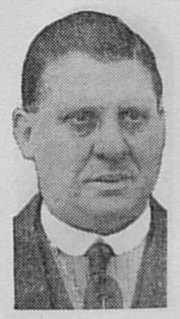
Middlesex County Councillor Ben Smith

Ben Smith MCC 1919
Middlesex County Council 1919


Benjamin "Ben" Smith was elected on 8th March 1919 as the first Labour Middlesex County Councillor for Hayes (and Northwood).

Born 29th January 1878. A former taxi driver (previously horse drawn
cabs). his boyhood was passed on the Warspite training ship and later served in the Navy and Mercantile Marine.


He was Organising Secretary of the London & Provincial Union of Licensed Vehicle Workers and then later United Vehicle Workers (which became the TGWU),

Ben Smith lived at 29 Birkbeck Avenue, Horn
Lane, Acton. and was active in "many committees in Acton".


He stood on a platform of

- Good Housing at reasonable rentals
- Equal Education facilities for all children
- Good Roads
- A better Tram service

He also
supported the nationalisation of all transport services

His election address contained a letter from Harry Gosling (the Uxbridge Labour Parliamentary Candidate in 1918) stating that the Hayes Labour Party were the only people who had tackled the housing problem.

His opponent was W.H. Evans owner/secretary of the Cocoa factory Hayes, West Middlesex


Ben Smith won on a low turnout, giving Labour its first Hayes Middlesex County Councillor

Elsewhere, in West Middlesex the Labour Party also did well in the County Council elections
at -

Hillingdon
William Henry Knowles of 2 Brandville Road, West Drayton was elected foor Labour


A leather & boots shop tradesman in Yiewsley, he had been Harry Gosling's Election Agent, he was involved in the Wesleyan church (Brotherhood movement),was a Yiewsley Labour Councillor, and had previously helped establish the shop workers union in Wycombe.

at

Southall- Norwood
James Culley of 41 South Road, Southall was elected as Labour MCC County Councillor

He was a railway signalman and was elected with a huge
majority


Ben Smith later dabbled with left wing politics and the Communist led "Red unions - RILU " but finally ended up in 1924 as Member of Parliament for Rotherhithe. Alderman Bermondsey Urban District Council 1926-1943. 


He became Sir Benjamin Smith and served in the 1945 Labour Cabinet as Food Minister, shock resignation in May 1946. Died 5th May 1964


Note
Ben Smiths nomination form for 1919 was signed
by (all women)
Proposer; Ada Hillier
Seconder;Annie Rhodes;
Assentors; Fanny Elizabeth Smith; Annie Eleanor Fuller; Alice Mary Laporte; Florence Gertrude Williams; Mary Catherine Aldridge; Charlotte Lillian Chambers; Ellen Pullen; May Smith

(this was the first County Council election where women had had the vote)