,BSOy!68d9Q~~60_58.JPG)


By Walter Ayles (Independant Labour Party 1923)


It is the 9th of November. For twelve months there has been a Socialist majority in the Town Council. The Mayor is on his feet, speaking of the year’s work. Let us listen.
“One thing I have noticed both in this Council and out-ride. There is a new attitude towards the Council’s work. There used to be a spirit, of distrust. All expenditure was grudged; there was continual grumbling about the rates. Now this has quite changed. Our citizens are developing a real sense of civic unity. They understand our policy and are ready to pay their rates because they realise that the money is used for the benefit of the community. We have taken the citizens into our confidence, and they have responded.
“Ladies and gentlemen, ours is a grave responsibility. We are here to serve the common good. In the name of the poor and needy, of the children and the aged, of the men and women who Labour for the city’s good, I ask you to be faithful to the trust they have ‘placed in our bands”
………………………………………………………………………………………………
A Socialist Town Council which could change the public attitude towards municipal politics in this way would have done its most necessary and difficult task. It would be the first duty of a Socialist Council so to order its activities as to bring about such a result.
The Socialist looks upon the Town Council as the natural body to express and improve the life of the town. He knows that by collective effort we can give to every citizen greater freedom, more material comfort, and a fuller life than is possible now. The Town Council is the great instrument which can be used to gain these advantages.
MUNICIPAL ENTERPRISE.
There are a number of things in modern society which we must do together in order to live. The Socialist wants many of these things done through the Town Council, representing, as it does, the common interest of the citizens. The anti-Socialist is only prepared for Town Councils to do these things when. No profit can be made out of them.
Thus the anti-Socialist is willing for the Town Council to make drains and sewers, keep the streets clean, build hospitals, and so on. But he is not willing for the Town Council to do other things which are just as necessary to the welfare of the people. Houses are wanted, gas and electricity are needed, food, meat, milk and coal are required. These, says the anti-Socialist, must not be provided co-operatively by the whole body of citizens. They must be pro-vided by private companies.
Why does the anti-Socialist want to keep these things in private hands ? Because a private profit can be made out of them.
The Socialist says that the interest of all the people should come before private interests, and that social services should be publicly organised as a partnership between die community and the workers engaged in the service
No one who has knowledge of municipal enterprise can deny that on the whole it has been cheaper and more efficient than private enterprise, and that the profits have benefited the whole town. Where municipal enterprise has not proved more efficient the: cause, has often been the failure to give opportunity for the active co-operation of the municipal employees. Where municipal enterprise has not proved cheaper the heavy capital costs have usually been to blame. An increased charge has had to be made to pay back the money borrowed and the interest upon it. This has occurred particularly in the case of houses.
MUNICIPAL BANKING.
To meet this difficulty the Socialist advocates the establishment of Municipal Banks.
The initial capital for municipal schemes is now borrowed from a private bank. But where does the bank get its money from ? From the tradesmen and citizens of the town. Thus the citizens of the town lend to the bank at a low rate of interest, and the bank lends their money back to them as represented in the Town Council, demands a higher interest upon it, and makes private profit in this transaction. A Socialist Town Council would establish a Municipal Bank and thus obtain capital for its schemes of public benefit without heavy interest charges to the Money Ring.
OUSTING THE FOOD PROFITEERS.
With reasonable facilities for obtaining capital, the Socialist Town Council would provide not only houses, water, gas, electricity and tramways, but other common necessities. Three things may be specially mentioned: bread, milk and meat. At present, owing to our wasteful competitive system, the cost of these necessities has increased enormously, and especially to the poorer consumer. The reports of Government committees have recently shown how all classes are fleeced by our present arrangements. The Socialist Town Council would either itself undertake the supply of these things in the interest of the whole body of citizens, or would encourage their provision through the Co-operative movement. Two benefits would follow :
(i) the cost to the consumer would be lessened, and
(2) the workers would be better paid and would have better conditions of labour.
THE CHILDREN’S CHARTER.
Side by side with these basic changes, the Socialist Town Council would carry out a broad programme for human welfare. It would begin with the children.
1. No child would be ill-born. Every kind of available information would be at the disposal of poor mothers before the birth of their children. During birth they would be accommodated in a maternity home. Help and advice would be given when they returned to their homes. All the voluntary help available would be linked up with the official organisation operating under the Health Acts to keep the personal touch human and sensitive and to supply the deficiencies of the law.
2. No child would be unfed. The Health Acts would be used for this purpose before school age and the Education Acts afterwards. There would be a plentiful and pure supply of milk for nursing mother? and their babies, and- school children in need would be properly fed whether the schools were in session or not.
3. No child would be unattended in illness. No children need have bad ears, noses or mouths. Doctors and nurses would see to them. The Health and Education Acts give power to provide doctors and nurses, and information. Mothers would be encouraged to attend classes and gain information regarding their all-important work; municipal crèches would be established for the children of mothers whom. Capitalism drove out to. work, and child clinics established for all who required them.
4. No child need be dirty. The Baths and Wash-houses and Education Acts jointly can be used to see that children are not only kept clean but are taught the rule’s of personal hygiene.
5. No child need be ignorant. The Consolidating Education Act of 1921 gives very large powers, and though the Board of Education may be niggardly and reactionary, there are vast powers that can be used without their approval being required.
6. No child need be homeless. The Housing Acts would be rigidly enforced and stretched so that every child should be housed and homed healthily. Slums would be cleared, flushing tanks would be made compulsory, and as rapidly as possible new accommodation provided in which children would be welcomed.
If you realise what the accomplishment of this six-point Children’s Charter would mean to our cities you get a glimpse of the revolution a Socialist Town
Council would make in civic life. The Socialist would frankly give parents their choice—the rates or the child. The significant thing is that if they choose the rates they will lose the child. If they choose the child they will actually save the rates too, not only because healthy children are cheaper than those that are sick and tuberculosis, but because expenditure will be able to be reduced on incapable and diseased adults.
NEXT IN ORDER COMES THE CARE OF THE AGED.
A community—and a Party—is to be judged by how it cares for the old, the sick and the young.
1, Applicants for Old Age Pensions would be helped technically to qualify for a pension. There are hundreds who need pensions and who rightly could claim them, but who for technical difficulties as to age, savings, allowances from children, and so on, do not get them. A Socialist Town Council Old Age Pensions Committee would help them to remove the technical difficulties so that justice and mercy could do their work.
2. Old Age Pensioners would be supplied with homes. This could .be done under the Housing Acts. All Town Planning Schemes should include provision for those who need one or two rooms for quite small rents. This would enable them to retain their own furniture and self-respect by keeping outside the Poor Law. It is done in Denmark.
3. Medical help would be given through the use of the Health Acts. Nurses would visit and advise.
4. Recreation and games would be provided in open spaces, and shelters provided of a beautiful and convenient type at small cost.
THE SICK WOULD BE CARED FOR.
There would be adequate provision for all infectious cases, including tuberculosis, and for the period of convalescence. All accidents and surgical cases would be provided for. The Health Insurance medical service would meet the needs of the employed workers and adequate dispensary accommodation would be provided for others. Information on all kinds of diseases and simple rules of precaution and remedies could and would be disseminated as. has recently been done with regard to influenza. A completely new outlook could also be developed in the case of lunatics and the mentally deficient. Reports of the work accomplished would be given fully to the public in order to instruct them in the use of a Socialist Town Council and an efficient public service.
THE UNEMPLOYED
The Socialist Town Council -would think constantly of the unemployed worker in its midst and would plan to provide useful, honourable work at Trade Union wages. The programme here outlined would necessitate a great increase in employment under the municipality—the construction of houses and schools and baths, the extension of parks, the improvement of the streets, etc. The Socialist Town Council would specially press ahead with its public schemes during times of extended unemployment so as to provide worthy work for as many as possible. Work for the ablebodied and honourable assistance for the sick and aged would be its motto. It would also increasingly press upon the Government the need for transforming the system that led to such dire results.
……………………………………………………………………………………….
Let us now give a few short notes on other activities a Socialist Town Council would undertake.
Baths and Wash-houses. This is a health service that would be given for a nominal charge so as to make it accessible to all who need. A community that has allowed bathless houses to be built and still allows overcrowding must be prepared to pay to prevent fever and plague. Cottage baths should be established in smaller suburbs as being more economical.
Blind Persons. All blind persons would be given a pension so that none need go on the street to beg. This can now be done under the Blind Persons Act. A Socialist Town Council would also see that the blind were given free passes on the trams to enable them to avoid the dangers of traffic-laden roads and also have a little healthful recreation.
Public Halls and Municipal Concerts. A Socialist Town Council would see that the poorest, no less than the -well-to-do, had a chance of hearing the best artistes.
Parks and Open Spaces. These are to a city what holidays are to an individual—an apparent expense which is a good investment. They would be put where needed most—a reversal of present policy.
Education. This wants a pamphlet to itself. A Socialist Town Council would not solely build permanent structures which are necessarily costly, but would build schools on the open-air principle with proper provision for bad weather. This would enable a larger number of schools to be provided out of the money available for the purpose. The numbers of scholars in classes would be gradually reduced until they were down to thirty. Teachers would be adequately trained and paid and given the status and freedom their important work warrants. Teachers’ and Parents’ Councils would be organised. There would be visiting days for parents at least once a quarter. Every child would be taught personal hygiene and how to swim, in addition to the usual sports and games. The child’s respect for literature and for a lesson that becomes more and more irksome
would be increased by treating the Bible as a treasured literary possession as well as a means of religious instruction. Holiday camps would be
organised both for boys and girls. (The money could be largely raised by voluntary efforts by the children themselves.) Social histories and geographies would take the place of the usual “drum and trumpet” and “date and fact” textbooks, and the heroic in life emphasised rather than that of the battlefield. English history would be taught in its relation to the life of other people. The fullest facilities would be given for continued education after the age of fourteen years. There would be a larger number of scholar-ships and maintenance grants for boys and girls able to use them adequately.
Fire Insurance. The property owned by all Corporations is very great, and large sums are spent’ on fire insurance. A scheme would be formulated for progressively taking over the fire insurances. This would be a very profitable bit of business.
Housing. Almost anything can be done in the-way of providing working-class dwellings. Direct or Guild labour has proved cheapest and best. Excellence of workmanship always means decreased maintenance charges.
A Town Planning department would be set up to do its job. It would be speedily established as a guide for all future development of new (and improvements of old) parts of the city.
Small temporary libraries would be established in all suburbs to meet the demand for books and papers, and as and when convenient larger establishments would be erected.
Museums and Art Galleries would be more largely used for popular lectures on their contents by the most highly qualified and popular lecturers. Lantern slides would be used for illustration. The Lectures would be at the times most convenient for working men and women.
Streets. Sanitary refuse bins would be made compulsory, and all houses collected from in the most convenient and expeditious manner. The refuse would be burnt and not tipped. Stone pitching for streets would gradually be abolished and asphalt carpeting supplied instead. It is most important that infants, men on night shift, and sick people should be allowed to sleep during the day and not disturbed by carts clattering over cobblestones. It is also cleaner and more sanitary. The smoke nuisance would be more drastically dealt with, especially in the northern towns. Where possible, trees would be planted-to brighten what are now soul-destroying avenues of drab monotony.
Small Holdings and allotments. The Socialist Town Council would buy—and not lease—land for small holdings and allotments, up to and a little beyond the ascertained demand. They would hand the land over to the association of holders to administer, thus establishing in the one way legally possible democratic control by the workers. The rent charges would cover (a) interest on money borrowed; (b) cost of city administration in connection with the Acts. But the sinking fund would be paid by the city itself as the land would ultimately belong not to the holders but to the citizens.
Administrative. Finally, there are certain administrative reforms of far-reaching importance to which a Socialist Town Council would attend. Let us take them in order.
1. All civic departments use a number of things in common. In many towns they all get different tenders for comparatively small quantities of goods, occupying different staffs of clerks to do the work. These include such things as cleaning materials, coal, paper, printing, and so on. The buying of these would be centralised and a Controller for central purchasing appointed. This has already been found very profitable in the few places where it has been tried.
There would be a co-ordination of Works Departments under one head. There are generally two and sometimes half a dozen under each Corporation. This department would be allowed to tender for all jobs required to be done by the Corporation in competition with outside contractors. It would be advantageous in the transition stage to allow competition with private contractors both for buildings and the supply of such things as gas and electric fittings and requisites.
Finance. A Socialist Town Council -would do away with the overlapping finance departments attached to the Borough and District Funds, and have one department and a consolidated rate. This would mean a saving of time, temper and money to the city.
An excellent combination! The City Treasurer would have control of all the accountancy departments of the Corporation undertakings. The finance
of the Corporation as a whole would come up for discussion at least once a year in addition to “Budget” days. Extra discussion on “ways and means” as a whole would do much good.
A Socialist Town Council would lead a vigorous agitation by local authorities’ for adequate grants from the Government for housing, unemployment,education, and other essential purposes.
RATES AND THE WORKER.
It is probable that this programme will lead to an increase in rates. That must be faced. Rates used wisely level up the standard of life. They are levied not only on the occupiers of houses but upon the factories and other business places, and the effect is to collect a certain sum from both rich and poor and to distribute it in the form of public services to the people as a whole.
The extent to which this is done depends upon the policy of the Council. A Council of Capitalists will pay considerable attention to the roads in, order to facilitate transport of their goods. This will not benefit the worker so much/especially if the educational and public health services are starved. A Socialist Council would increase the facilities of free education, free meals for children, cheap transport maternity and child welfare, and the many other things described above.
If a workman will sit down and think for five minutes and will ask himself how much these sendees would cost him if he had to provide them individually, he will see how municipal activity on the right lines’ actually increases his real wages. It may be that it will cost him a few pence a week extra in rates, but if he balances against this what he gets he will see that he has made a good bargain. Anti-Socialists are always out to keep the rates low on things that benefit the worker. They claim that they want to save the worker money. They really want to keep down to the lowest the public services which increase his real wages.
LABOUR.
Corporation labour has hardly ever been rightly handled. It is not wise to divorce municipal employees from labour in private employ. The difference of 2S. a week, slightly lower hours, better holiday allowances, security of employment, would enable the community to get the best labour and not the throw-outs of private enterprise. Advisory courts would be established in all departments and a joint advisory court for the whole employees to advise the Corporation as to the conduct of the working conditions. This would be a step towards workers’ control and would train them in the job of organising industry.
No step would be taken without consultation with the workers’ representatives. All labour questions would be settled in that way, whether of output, discipline, wage-hours, holidays, the introduction of machinery, the restriction or expansion of departmental activity. .
THE SOCIALIST VIEW.
The programme -which has been outlined above indicates the new attitude in which Socialists approach the problem of civic life. To Socialists the Town Council is not a mere governing body. It is a committee of all the citizens. -If the citizens are animated with a keen desire for the true welfare of their city they will place upon it men and women with vision—men and women with a spirit of social service—men and women who are determined to make citizenship a reality to all.
See to it that your Town Council becomes a Socialist body !
Write to the Head Office of the Independent Labour Party (ILP) Headland House, 508 Gray’s Inn Road, London, W.C. 1 for particulars of the work of the Party, and how you may join it. The Secretary will also be glad to send you, post free, a list of interesting ‘Pamphlets and Books on Socialism and Labour questions.
Walter Ayles
Labour MP for Hayes & Harlington
Bristol City Labour Councillor


 ILP NOTES October 1925
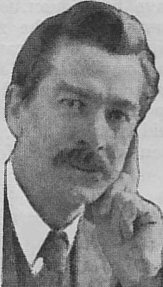
Born at 26 Thorne Street, Wandsworth Road, Lambeth,
After six months' unemployment, he got a job in a newsagent's shop, and in March1899 went to
.
In 1904 he joined the Independent Labour Party (ILP) and as a Labour candidate was elected to the Birmingham Board of Guardians (Aston) 1904-1907,
In 1910 Ayles moved to Bristol to become
During the first 18 months from his appointment the branch quadrupled its activities and greatly increased its membership.
In 1912 he was elected for Easton ward of Bristol City Council, a seat he retained until 1922. In his first year on the council he wrote a pamphlet "Bristols Next Step" and in 1923 (relected 1923-, Ayles wrote an ILP booklet on “What a Socialist Town Council Would Do”
Ayles elected to the National Council of the I.L.P 1912-1927. He has also been for the last nine years chairman of the Bristol Labour Party.
Walter Ayles persistently and energetically opposed the World War One as he had the Boer War. Arrested as a conscientious objector, he remained in the hands of the military and prison authorities for two-and-a-half years, and was confined in seven different jails. He held office in the No-Conscription Fellowship and the Fellowship of Reconciliation. In 1920 he helped found the No More War Movement (NMWM)
He was a local preacher for 20 years among the Methodists and Congregationalists, but after the war he joined the Society of Friends (Quakers). He has been for many years an active Rechabite.
He was Labour Member of Parliament for Bristol North 1923-1924 and 1929 1931
He fought Bristol North for a sventh time in 1935 and after defeat accepted that it was time to move on
He moved to Orpington near London and was soon elected as a Urban District Councillor in 1937